Directed by Werner Herzog, 2026, United States
Watched 8 October 2026, New York Film Festival 64, Alice Tully Hall
Q&A with Kate Mara and Rooney Mara
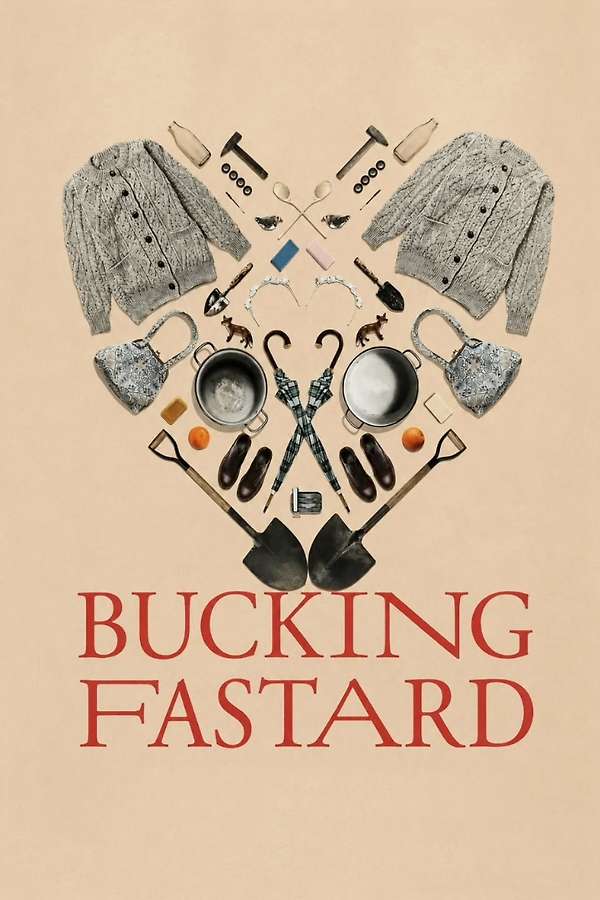
In conversation with Persona, how does one identity become entangled with another? What’s left if you have the ability to escape? Bucking Fastard has many funny moments, but it also left me a little bit heartbroken.
Sisters Joan (Rooney) and Jean (Kate) are so incredibly close that they speak and act in unison, mirroring one another’s actions when they aren’t speaking or touching. They wear the same clothes, wear the same hairstyle, and they fall in love with the same man. He’s the drunken next door neighbor, hardly a catch, but the two experience excruciating heartache upon discovering he’s marrying someone else. Instead of letting go, they carry out some baffling acts of harassment and find themselves in court. Slapped with a restraining order and increasing notoriety, the sisters move from their isolated Irish village to Dublin.
In Dublin, Joan and Jean live in an unused apartment provided for free by a kindly neighbor, but their fame has followed them. They are stopped by strangers in the street for selfies and harassed by the building’s landlord and his employees. One of the men cuts Joan’s hair, which causes distress because the women are no longer identical. Somehow they’ve been assigned a social worker, who visits regularly and attempts to pull the sisters apart enough that they can experience some independence.
One of the social worker’s suggestions is taking the train to visit their parents. The two successfully buy tickets and embark on the journey, but when they arrive at their childhood home, no one answers the door. They return to Dublin rejected and anguished, only to discover that they are being spied upon through their bedroom window. Joan and Jean are clever, so they booby trap the roof across the way and end up seriously injuring their peeping tom (the landlord). Luckily a letter arrives from their aunt, who asks the women to come and live with her in the countryside and they accept the offer.
The sweeping vistas and quiet lifestyle of the country are better for Joan and Jean. They easily take over some of the farm tasks and are free from prying eyes. A friendly shepherd gives them a tour of caves near the top of a mountain behind the farm and shows them a tunnel inside. Local legend says a madman began digging the tunnel 200 years earlier to reach the Orkney Islands. Of course this is impossible, but Joan and Jean take over the task, determined to find “a better life” for themselves.
The women work together for years and manage to extend the tunnel about 30 feet without realizing they’ve also created a small hole near the ground that leads to a vast cave system. Their pet fox discovers it first, then they follow suit after creating a larger opening. The larger cave has clearly been explored and developed for tourists, with concrete walking paths, handrails, and strategic lighting on mineral formations. Joan and Jean are captivated by it, but confused as to how it exists directly alongside their own tunnel. There are train tracks crisscrossing the various areas and they jump out of the way when a small train appears. The conductor appears to be the neighbor they fell in love with.
The sisters are ecstatic. They run back the farm, don wedding dresses, bury their other clothes, and run back to the cave. To find their future husband, who obviously has no idea he is a contender for the part, they rush along the tracks until they reach the entrance–right as a guard is closing the gate. They are trapped. The sisters can’t come out because they couldn’t be in.
Joan and Jean were interesting to me on a number of levels, but the one thing that drove this story for me was the unknown incident(s) in their past that caused them to identify with one another so closely. It was incredibly cruel for their parents to essentially abandon them, to refuse them when they visited. Even if they found the behavior of the sisters embarrassing, there’s no way they didn’t play a role in whatever trauma was experienced. You don’t have siblings whose identities are so entwined without some sort of abuse or mistreatment.
The social worker was a real favorite character of mine. His acceptance of them, even as he tried to help them, led to multiple feel-good moments–despite the fact that he was the reason they attempted to visit their parents. The aunt and new friend McFarlane, who introduced them to the caves, were also bright spots. I liked seeing people who were kind and didn’t question the way Joan and Jean lived. The two women so clearly needed to be cared for and they needed friends.
Something else I found interesting was the fact that Joan and Jean were not twins. There are a lot of tales of twins who speak a secret language or who have pseudo-psychic powers or any number of things that shows how connected they are outside the womb. To have twin-like characters that are only sisters, I think, was even more interesting. And it was kind of heartbreaking when they tried to break away from each other. Once I got used to the idea that they’re going to be speaking and acting in unison, it became uncomfortable to see one or the other do something as an individual.
A cave, I suppose, symbolizes depths…plumbing the depths of your psyche perhaps, digging deep into something. Joan and Jean manage to extend their tunnel 27 feet over a couple of years, which is when Joan begins to question it. For a moment we do think that she’s going to give up, throw in the pick, and that moment in the film is the most emotion she shows. There’s a real sense of frustration and perhaps individual personality poking through, but it’s short-lived. It is soon after this moment that their pet fox Cupid disappears into yet another hole. Foxes carry a lot of symbolism across cultures, including that of trickery and cunning. Cupid shows them a way out of their tunnel, but into a more complicated cave. In the end, they remained on the wrong side of the gate. They couldn’t come out because they couldn’t be in. The guard couldn’t count them as people that came out, because he couldn’t count them as people that went in.
Bucking Fastard was unexpected, often delightful, and certainly thought provoking. I give it two thumbs up and I look forward to another watch. (Let me also throw my support behind the Mara sisters working together again.)
Leave a Reply